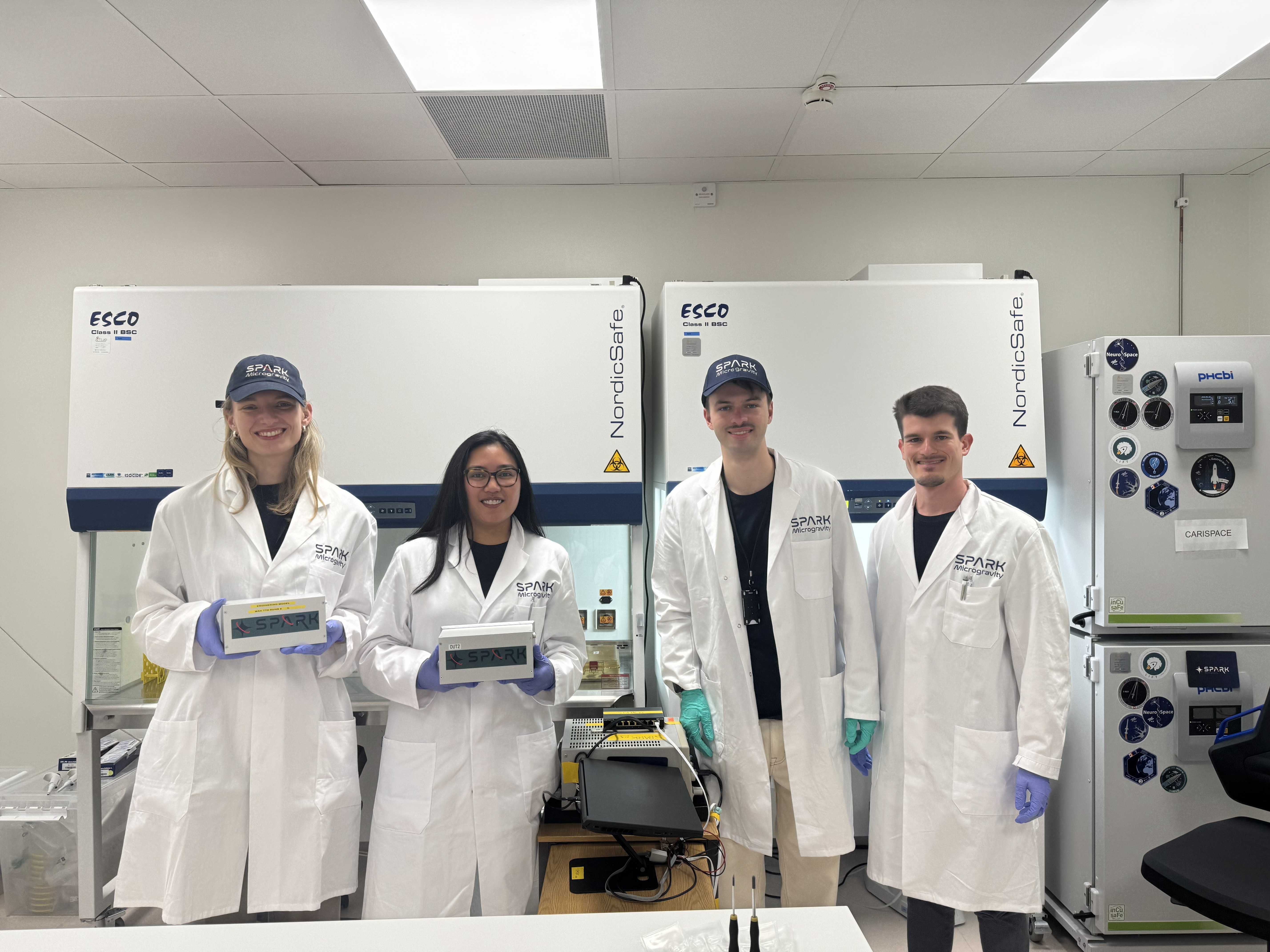
SPARK Microgravity Completes First Rocket Launch, Marking a Major Milestone Toward Orbital Cancer Research
SPARK Microgravity Completes First Rocket Launch, Marking a Major Milestone Toward Orbital Cancer Research


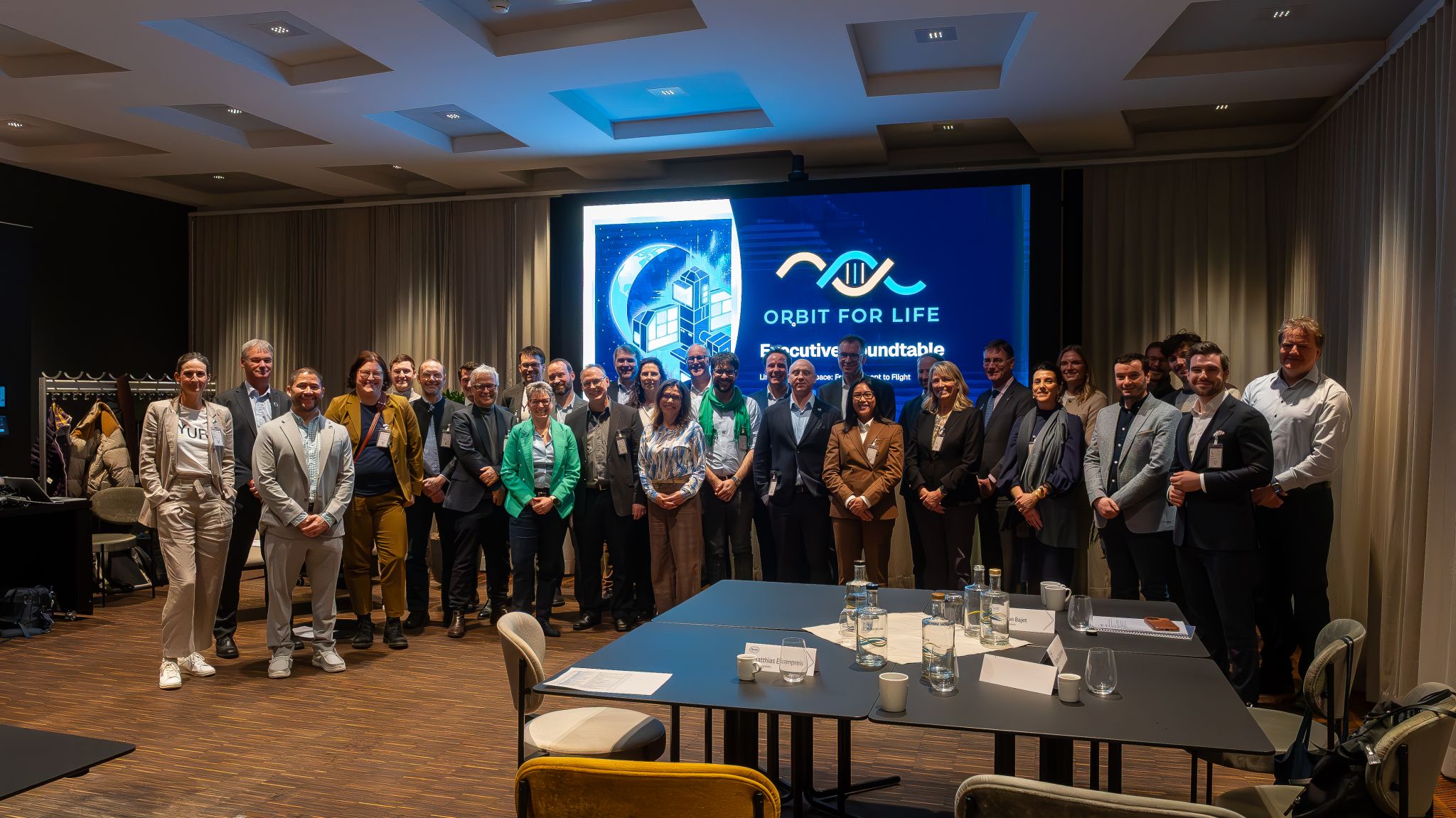
Munich, Germany — January 2026 — SPARK Microgravity announced that co-founders Allison Bajet and Katharina Weidmann participated in the ORBIT FOR LIFE Executive Roundtable held on 27 January 2026 at Roche Diagnostics in Rotkreuz, Switzerland. The event brought together leaders from pharma, biotech, space infrastructure, agencies, and research to discuss how microgravity can become a scalable and credible R&D platform for healthcare.
The roundtable focused on key themes including organoids and oncology, 3D bioprinting, longevity research, astronaut sensing, data infrastructure, and faster paths from concept to flight. ORBIT FOR LIFE described the session as its pilot executive roundtable exploring how to translate microgravity science into practical healthcare innovation.
During the event, Allison Bajet contributed to the Organoids & Oncology discussion, while Katharina Weidmann contributed to the Astronaut Sensing & Data discussion, where she addressed data protection, IP, cybersecurity, and infrastructure. Public summaries of the event highlighted the importance of secure data systems, trusted infrastructure, and stronger pathways for translating space-based research into industry use.
SPARK Microgravity joined the discussion as part of its mission to advance oncology research in real microgravity and help make space-based life science more practical, reproducible, and commercially relevant. In a public post following the event, SPARK stated that its founders were pleased to join ORBIT FOR LIFE’s roundtable at Roche and connect with the growing international life-sciences-in-space community.
“Bringing leaders from oncology, diagnostics, and space into the same room is exactly what this field needs,” said Allison Bajet, Co-Founder and CEO of SPARK Microgravity. “Microgravity is emerging as a serious research environment for generating new biological insight, and we believe it can become a powerful tool in improving how cancer therapies are developed.”
“Events like this help move the conversation from possibility to implementation,” said Katharina Weidmann, Co-Founder and COO of SPARK Microgravity. “The future of space-enabled life science will depend on credible hardware, reproducible workflows, secure data infrastructure, and strong collaboration across science, industry, and healthcare.”
For SPARK Microgravity, participation in the roundtable marked another step in supporting the development of microgravity as a meaningful platform for next-generation cancer research and translational life science innovation. ORBIT FOR LIFE’s published summary emphasized the need for better access to space-generated data, faster certification and regulatory pathways, and stronger support for scaling from science to industry.
SPARK Microgravity is building an autonomous orbital cancer lab to help researchers generate more predictive oncology data in real microgravity. The company develops standardized, flight-ready hardware for life-science experiments in space, with a focus on enabling practical, repeatable, and decision-relevant biological research.
SPARK Microgravity Completes First Rocket Launch, Marking a Major Milestone Toward Orbital Cancer Research

SPARK Microgravity’s leadership engaged with partners including Atmos Space Cargo, Space Cargo Unlimited, and Merck Sharp & Dohme (MSD)
.svg)


From orbit to clinic, let’s launch the future of healthcare, together.