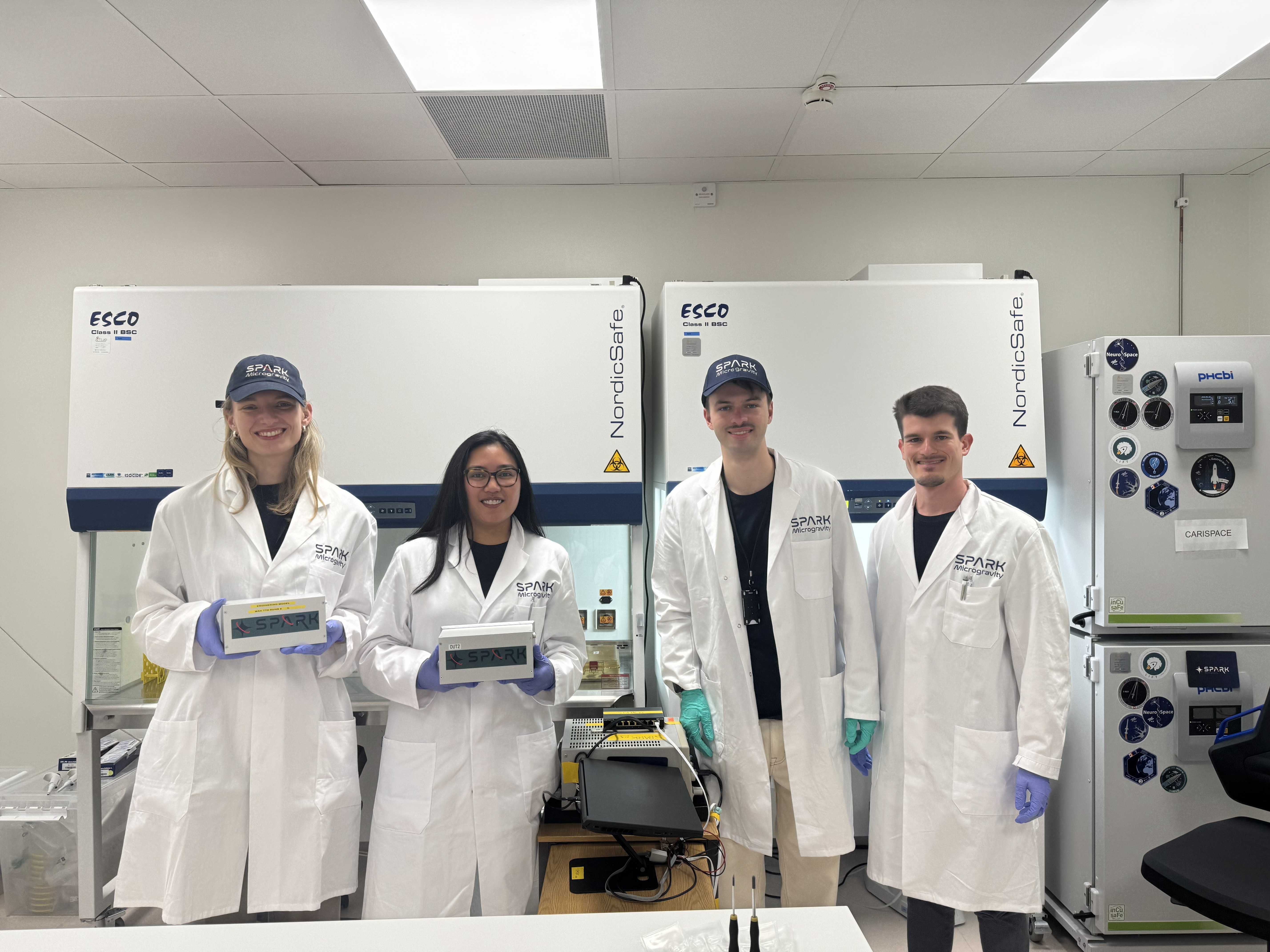
SPARK Microgravity Completes First Rocket Launch, Marking a Major Milestone Toward Orbital Cancer Research
SPARK Microgravity Completes First Rocket Launch, Marking a Major Milestone Toward Orbital Cancer Research


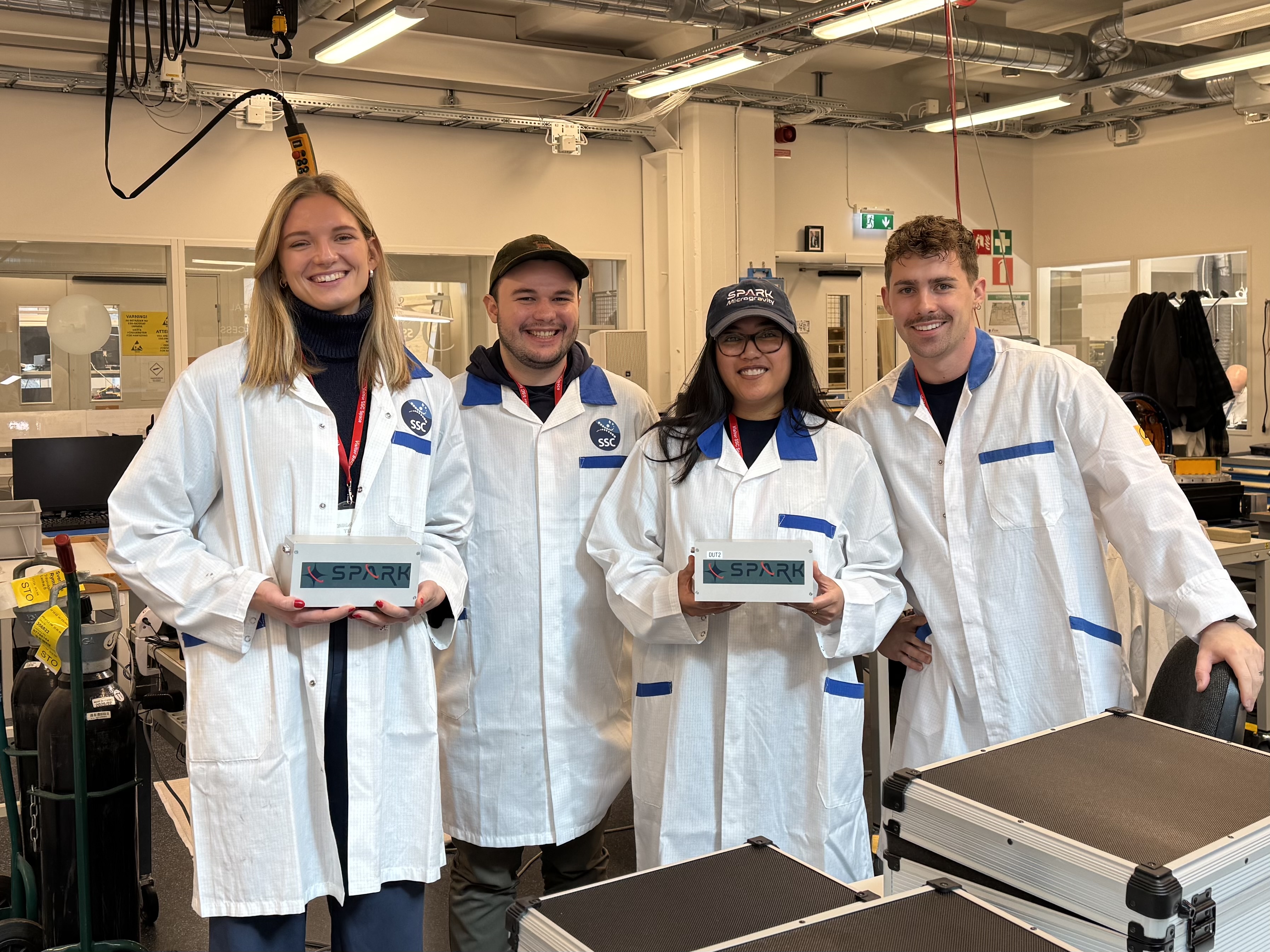
Munich, Germany / Esrange Space Center, Sweden — April 2026 — SPARK Microgravity has successfully completed its integration campaign with Swedish Space Corporation (SSC) in Sweden, reaching a major milestone on the path toward the first flight of its cancer research platform aboard SubOrbital Express. The mission is currently targeted for late May 2026, subject to final launch readiness, range operations, and weather conditions. SSC publicly lists the next SubOrbital Express microgravity mission for May 2026.
The campaign marks SPARK’s first in-flight integration with SSC and an important operational step toward the company’s long-term vision of enabling commercial cancer research in microgravity. Earlier this year, Frontiers reported that SPARK had announced plans to build Europe’s first dedicated commercial cancer lab in space, with a first flight demonstration scheduled in partnership with SSC.
At Esrange, SPARK’s team worked through the flight integration process under real mission conditions, preparing the system for suborbital execution and validating the interfaces, procedures, and operational readiness required for launch. SSC describes SubOrbital Express as a sounding-rocket service for microgravity research and technology demonstration, open to scientific and commercial payloads.
“This campaign is a real step forward for SPARK,” said Allison Bajet, Co-Founder and CEO of SPARK Microgravity. “We are building toward a future in which cancer researchers can access microgravity not as a rare opportunity, but as a practical and repeatable research environment. Completing integration at Esrange brings that future closer.”
SPARK’s broader foundation is that microgravity can reveal biological behaviors that are harder to observe under Earth-bound conditions. Public reporting on the company has highlighted how reduced gravitational effects can support more natural three-dimensional cell organization and produce data that may improve oncology model quality, translational insight, and therapeutic decision-making. Frontiers also reported that SPARK is developing the platform in collaboration with commercial-space partners including Axiom Space and Voyager Technologies, with ATMOS Space Cargo supporting future return opportunities.
The late-May mission is intended to serve as an early execution milestone in that roadmap. While suborbital in duration, it is designed to validate critical elements of SPARK’s platform in a real microgravity flight environment and provide operational learning for future missions. Esrange has long been one of Europe’s established centers for sounding-rocket and microgravity missions, and SSC’s SubOrbital Express program provides a proven route for research teams seeking access to flight.
“For a company building frontier life-science infrastructure, integration is where strategy meets execution,” said Katharina Weidmann, Co-Founder and COO of SPARK Microgravity. “This campaign was about demonstrating that our system can operate within the realities of a flight program—technical constraints, operational discipline, and launch timelines. That is how a long-term vision becomes a credible platform.”
The mission comes at a time of growing external visibility for SPARK. In January, the company presented its vision at Frontiers Science House in Davos, where it framed microgravity as a meaningful new environment for oncology research and announced its ambition to build Europe’s first dedicated commercial cancer lab in space.
With the integration campaign now complete, SPARK will move into final preparations ahead of launch. The forthcoming flight is expected to generate valuable technical and operational validation as the company advances toward its broader goal: building the infrastructure that helps researchers study cancer in ways Earth alone cannot provide.
SPARK Microgravity is building commercial microgravity research infrastructure for oncology. The company’s long-term goal is to enable scientists and biopharma partners to study cancer in space through a dedicated orbital platform designed to generate higher-fidelity biological insight and support better therapeutic decisions. Frontiers reported in January 2026 that SPARK had announced plans to build Europe’s first dedicated commercial cancer lab in space.
SubOrbital Express is SSC’s sounding-rocket service for microgravity research and technology demonstration, operated from Esrange Space Center in Sweden. SSC publicly states that the next mission is scheduled for May 2026 and is open to institutional, scientific, and commercial payloads.
SPARK Microgravity Completes First Rocket Launch, Marking a Major Milestone Toward Orbital Cancer Research

SPARK Microgravity’s leadership engaged with partners including Atmos Space Cargo, Space Cargo Unlimited, and Merck Sharp & Dohme (MSD)
.svg)


From orbit to clinic, let’s launch the future of healthcare, together.