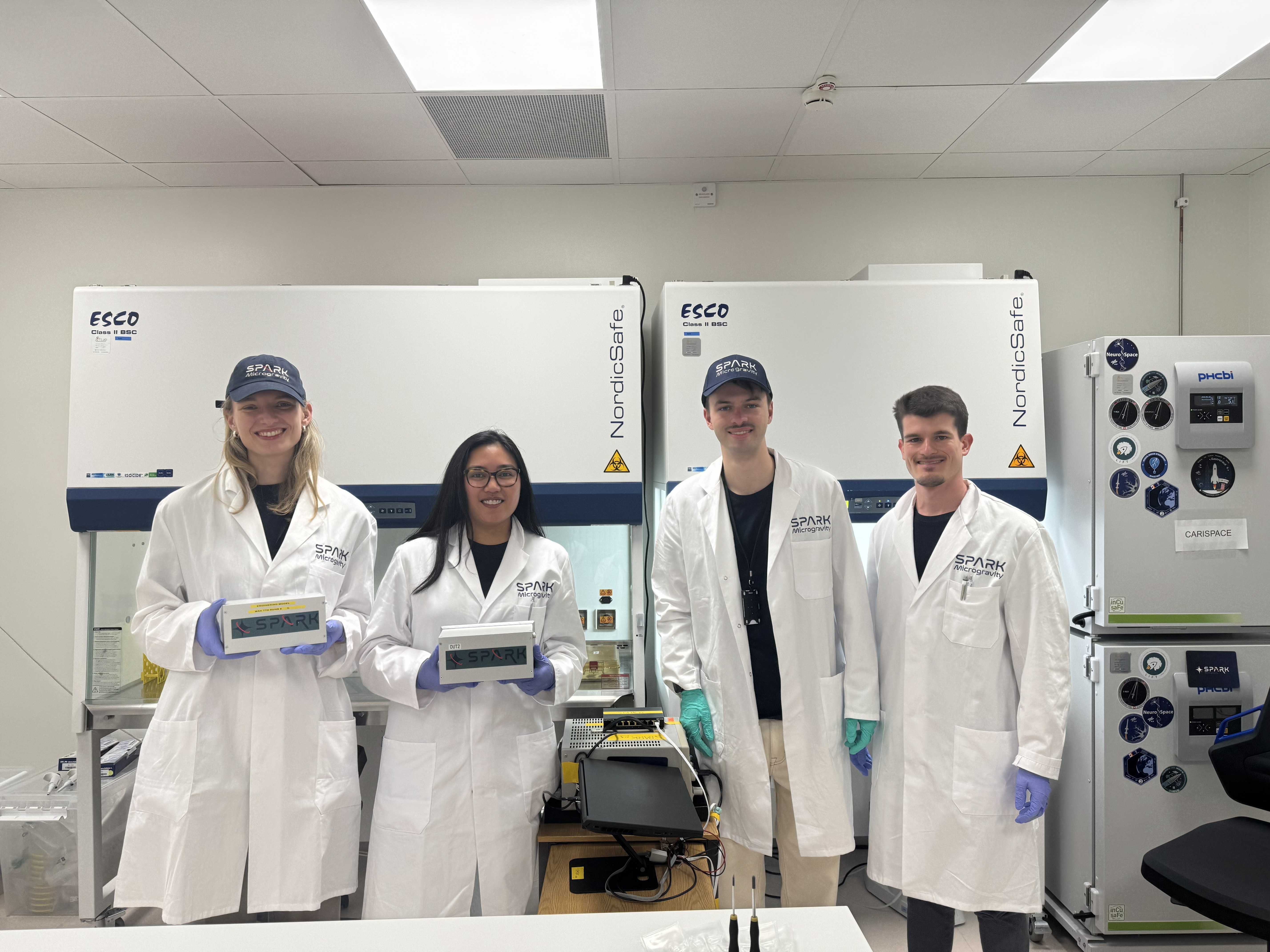
SPARK Microgravity Completes First Rocket Launch, Marking a Major Milestone Toward Orbital Cancer Research
SPARK Microgravity Completes First Rocket Launch, Marking a Major Milestone Toward Orbital Cancer Research



Munich, Germany — April 2026 — SPARK Microgravity today announced that its co-founders, Allison Bajet (CEO) and Katharina Weidmann (COO), participated in a recent European gathering of leaders shaping the future of space medicine and microgravity-enabled research, convened under the European Space for Health Alliance (ESHA).

The event brought together a curated group of industry operators, research institutions, and commercial space partners working at the intersection of biotechnology, orbital infrastructure, and translational medicine. Discussions centered on the growing demand for scalable microgravity research capabilities and the need for coordinated European infrastructure to accelerate scientific and clinical outcomes.
During the event, SPARK’s co-founders engaged directly with key partners across the ecosystem, including teams from Atmos Space Cargo, Space Cargo Unlimited, and MSD. Among those conversations was an exchange with Paul Reichert of Merck Research Laboratories, whose prior work has included microgravity research involving pembrolizumab (Keytruda) and who has been identified publicly as a principal investigator on Merck’s space-related research efforts.
Conversations focused on operational integration, payload standardization, and the evolution of end-to-end platforms capable of supporting repeatable biological experiments in orbit. A central theme across the event was the shift from isolated scientific missions toward coordinated, reliable infrastructure for biomedical and pharmaceutical research in space.
“Europe is entering a phase where space medicine is no longer experimental—it is becoming infrastructure,” said Allison Bajet, CEO of SPARK Microgravity. “What stood out in these discussions is a shared understanding: if we want decision-grade biomedical data from space, we need systems that are reliable, autonomous, and scalable.”

Katharina Weidmann, COO, added: “There is a clear shift from one-off experiments toward coordinated, high-cadence research. Being in the room with partners across logistics, pharma, and platform providers reinforced how critical tight integration across the stack will be.”

SPARK Microgravity continues to position itself as a contributor to this emerging ecosystem through its autonomous orbital laboratory platform, designed to deliver standardized, high-fidelity biological data for pharmaceutical and research partners.
SPARK Microgravity is building autonomous orbital laboratories for cancer research, enabling pharmaceutical and scientific partners to run standardized, high-quality experiments in microgravity. The company’s platform is designed to transform space from a bespoke research environment into a repeatable, decision-grade biomedical infrastructure.
#Microgravity #SpaceMedicine #SpaceBiotech #CancerResearch #OrbitalLabs #LifeSciences #NewSpace #PharmaInnovation #DrugDiscovery #EuropeanInnovation #ESHA #SpaceTech
SPARK Microgravity Completes First Rocket Launch, Marking a Major Milestone Toward Orbital Cancer Research
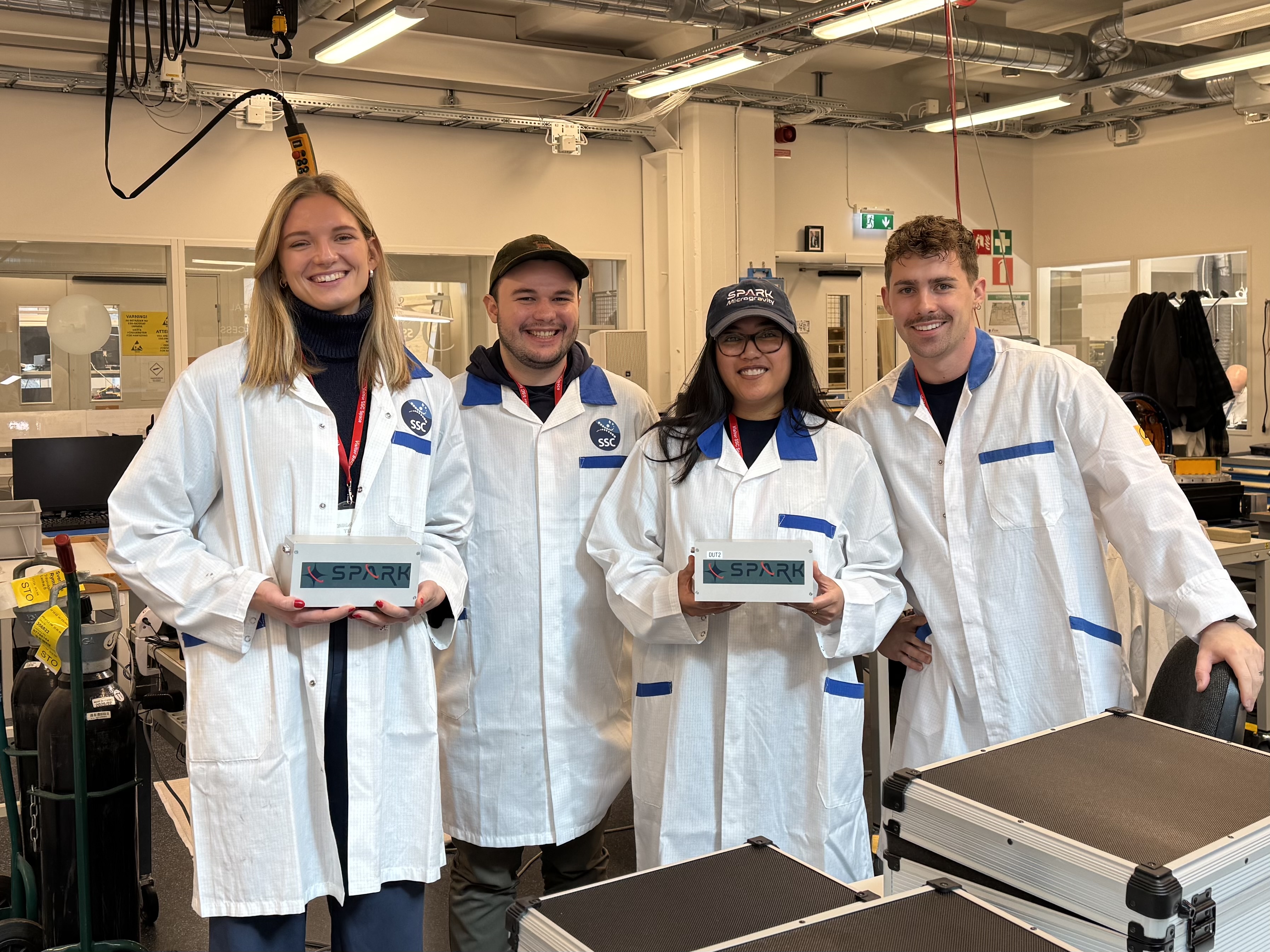
SPARK Microgravity has successfully completed its integration campaign with Swedish Space Corporation (SSC).
.svg)


From orbit to clinic, let’s launch the future of healthcare, together.