SPARK Microgravity Completes First Rocket Launch, Marking a Major Milestone Toward Orbital Cancer Research
SPARK Microgravity Completes First Rocket Launch, Marking a Major Milestone Toward Orbital Cancer Research
Date
June 10, 2026
Category
Press-Release
Reading Time
SPARK Microgravity Completes First Rocket Launch, Marking a Major Milestone Toward Orbital Cancer Research
SPARK Microgravity has successfully completed its first rocket launch, marking an important milestone in our mission to make space a new research environment for cancer biology.
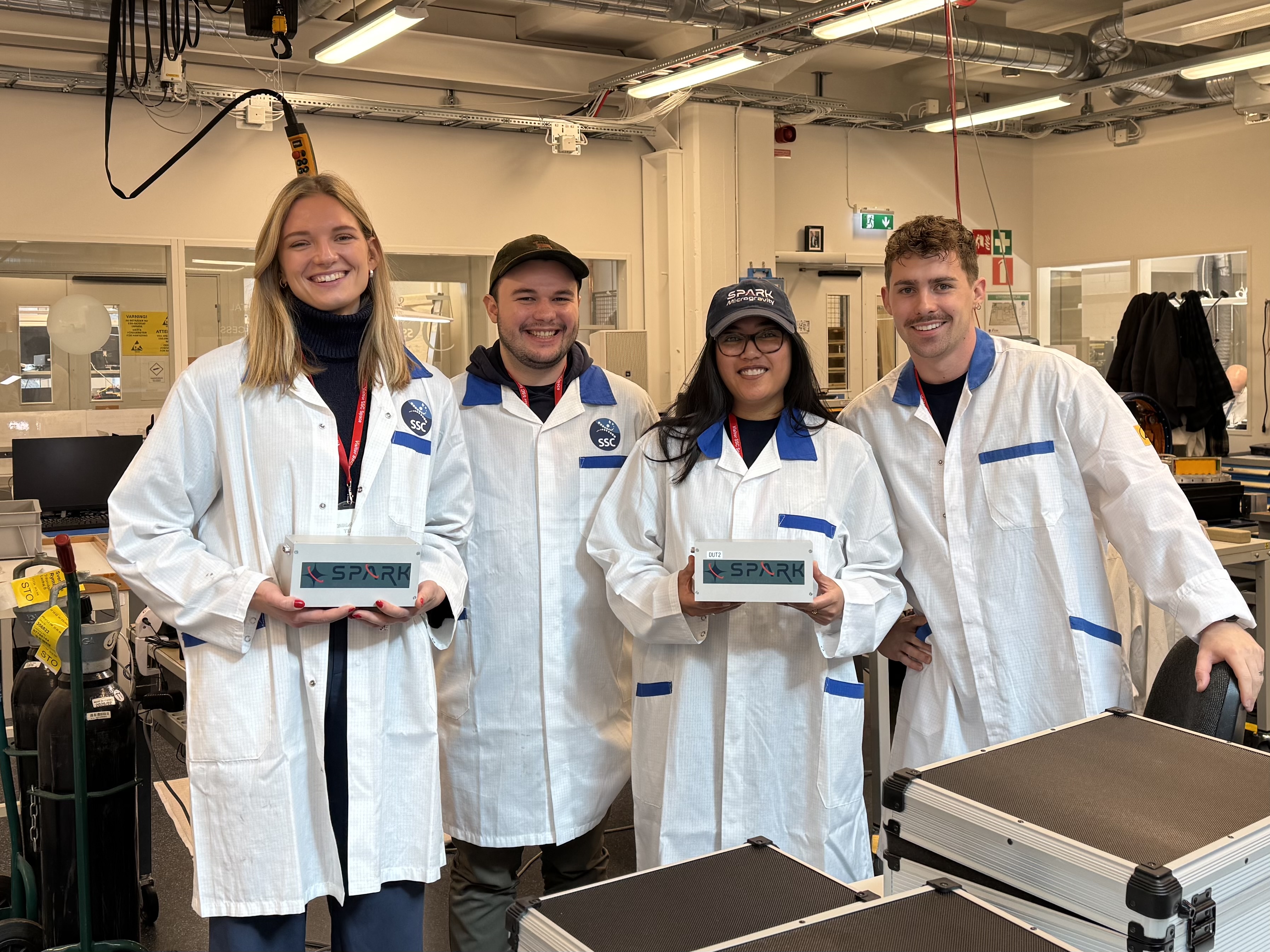
On 31 May 2026, SPARK launched its first biological payload from Esrange Space Center in Kiruna, Sweden, aboard the SubOrbital Express 5 sounding rocket operated by the Swedish Space Corporation.
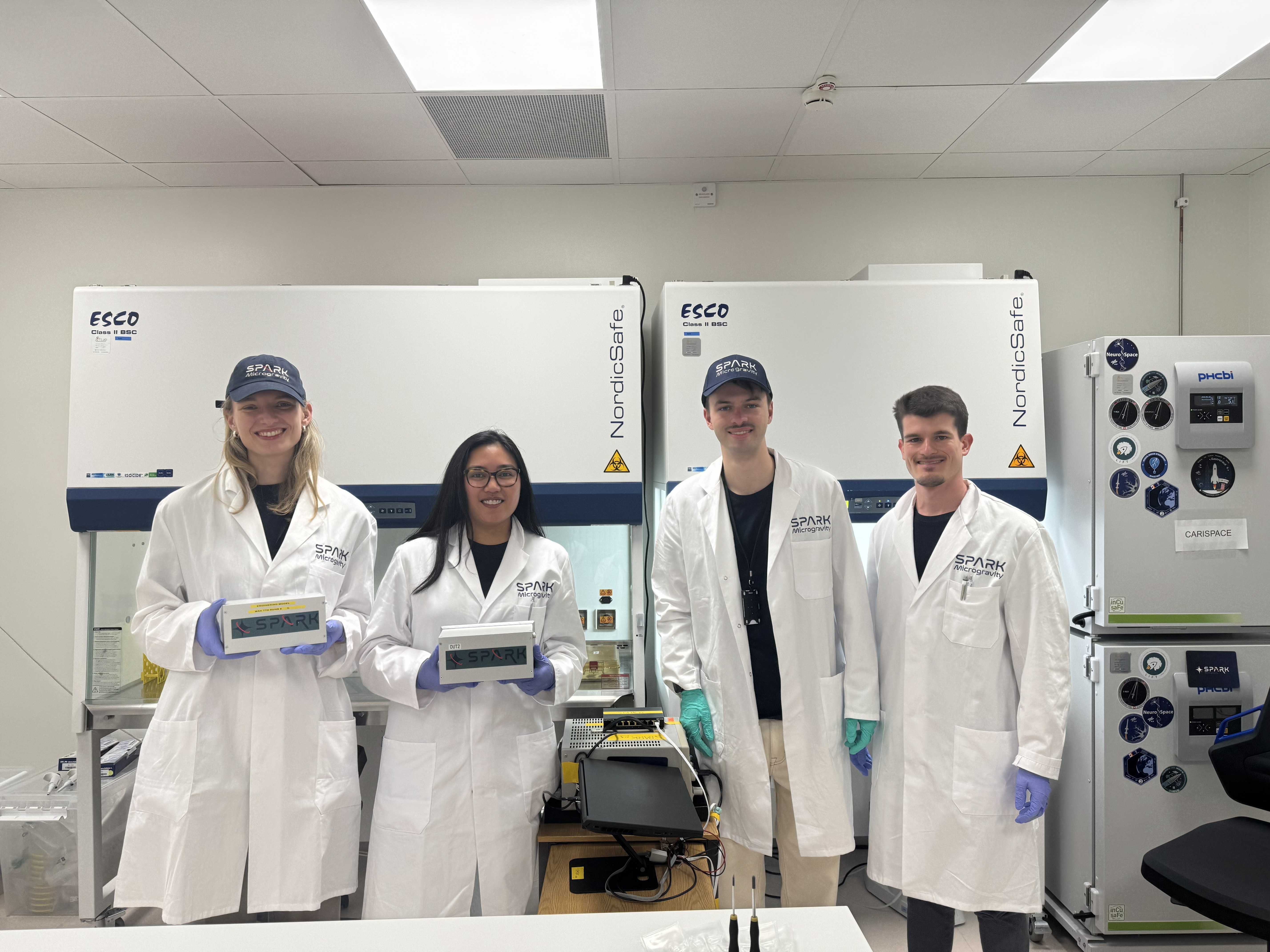
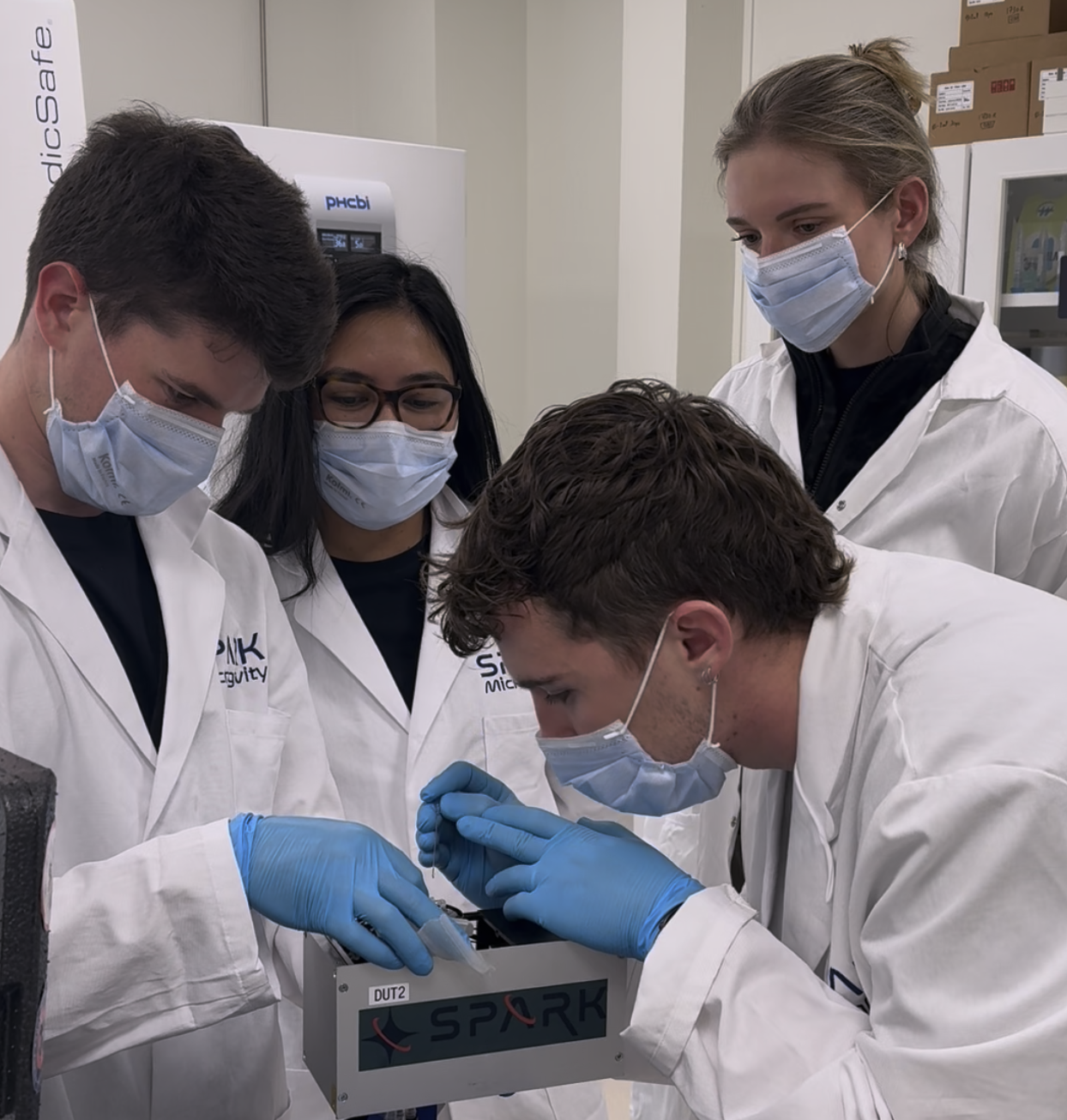
The mission, known internally as SPARK-01, represented SPARK’s first end-to-end spaceflight campaign: from biological preparation and payload integration to launch operations, recovery, and post-flight sample handling.
For SPARK, this was a defining step. It moved our platform from ground-based development into real flight conditions and provided the team with first-hand operational experience in biological spaceflight.
Why We Went to Space
Cancer research urgently needs better preclinical models.
Despite enormous investment, many therapies that look promising in early models fail later in clinical development. One reason is that conventional systems on Earth cannot fully capture the complexity of how cancer cells adapt, organize, and respond to stress over time.
Microgravity offers a unique physical environment for studying biology. In space, cells experience conditions that can reveal behaviors not easily observed in standard laboratory models. This makes microgravity a valuable additional layer for understanding disease biology and improving translational research.
SPARK’s mission is to make this environment more accessible, repeatable, and useful for cancer researchers.
We are building autonomous space laboratories designed to support biological studies beyond Earth — without requiring large infrastructure or constant human intervention.
What SPARK-01 Proved
SPARK-01 was a technology and operations validation mission.
The goal was not to generate a full oncology dataset. Instead, the mission was designed to prove that SPARK could prepare, integrate, launch, recover, and preserve a biological payload through a real spaceflight campaign.
The launch validated several important capabilities:
End-to-end mission execution SPARK successfully managed the full operational chain from biological preparation through launch and recovery.
Biological payload handling under campaign conditions The team demonstrated that sensitive biological material could be prepared and managed within the time constraints and complexity of a live launch campaign.
Autonomous platform operation The mission showed that SPARK’s system architecture can support biological experimentation in a compact, automated spaceflight format.
Recovery and post-flight workflow The payload was recovered after flight and prepared for downstream biological analysis.
Team readiness SPARK demonstrated that its team can operate across biology, engineering, and spaceflight execution under real mission pressure.
Why This Matters
SPARK-01 gives SPARK its first flight heritage.
That matters because the future of space biology will depend on platforms that are smaller, more autonomous, and easier to access than traditional research infrastructure in space.
Historically, biological research in orbit has been constrained by cost, limited access, operational complexity, and reliance on large systems. SPARK is building a different model: a compact, repeatable platform that can support high-quality biological studies for cancer researchers, pharmaceutical companies, and translational science teams.
Our vision is to create a new category of microgravity research infrastructure — one designed specifically for scalable biological discovery.
SPARK-01 was the first step in proving that vision in flight.
From Launch Validation to Orbital Research
A sounding rocket provides only a short period of microgravity, but it is a powerful environment for validating hardware, operational procedures, and biological workflows before longer-duration missions.
The next stage for SPARK is orbital research.
In orbit, SPARK plans to support longer-duration biological studies that can generate deeper datasets across cancer progression, treatment response, cellular adaptation, and disease-relevant behavior.
This is where the scientific value becomes much larger.
SPARK’s long-term objective is to build a premium microgravity data platform for oncology, beginning with cancer and expanding into other areas of biology where space can reveal mechanisms that are difficult to study on Earth.
Built for a New Era of Space Biology
SPARK was founded on a simple belief: space can become a practical research environment for life science on Earth.
To make that possible, biological spaceflight needs to become more accessible, more repeatable, and more commercially relevant.
SPARK-01 showed that our team can take a biological spaceflight system from concept to launch and recovery.
It gave us operational confidence.
It gave us flight heritage.
And it marked the beginning of SPARK’s transition from platform development toward orbital research execution.
What Comes Next
With SPARK-01 complete, SPARK is now advancing the next phase of its platform and preparing for longer-duration missions.
Our focus is on strengthening our oncology research partnerships, expanding our technical capabilities, and building the infrastructure required to generate high-value microgravity datasets for cancer research.
The first mission proved that SPARK can fly.
The next missions are about proving what space can reveal.
SPARK Microgravity is building autonomous laboratories for cancer research in orbit — because the next frontier in biology may not be on Earth.




.svg)