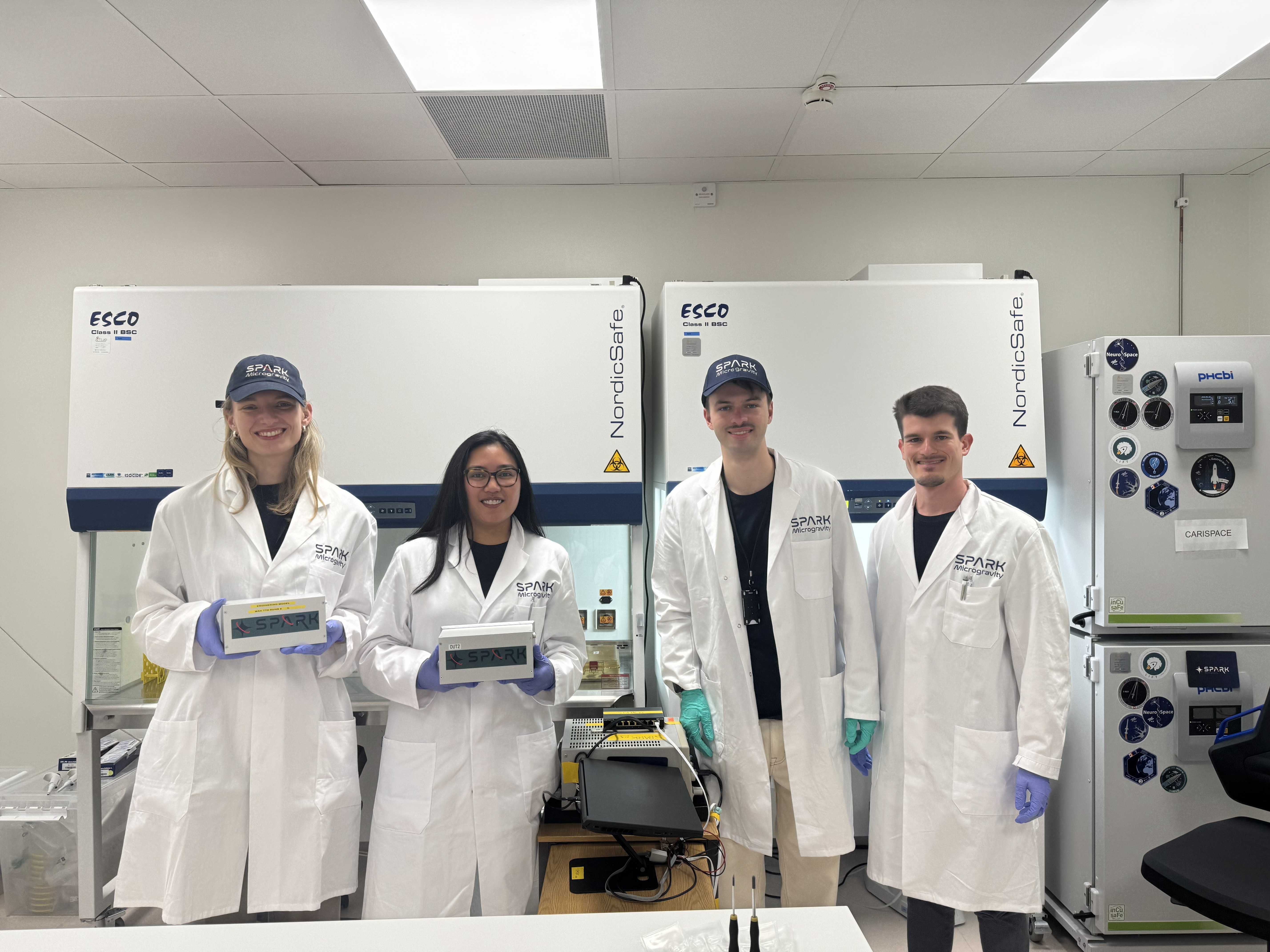
SPARK Microgravity Completes First Rocket Launch, Marking a Major Milestone Toward Orbital Cancer Research
SPARK Microgravity Completes First Rocket Launch, Marking a Major Milestone Toward Orbital Cancer Research


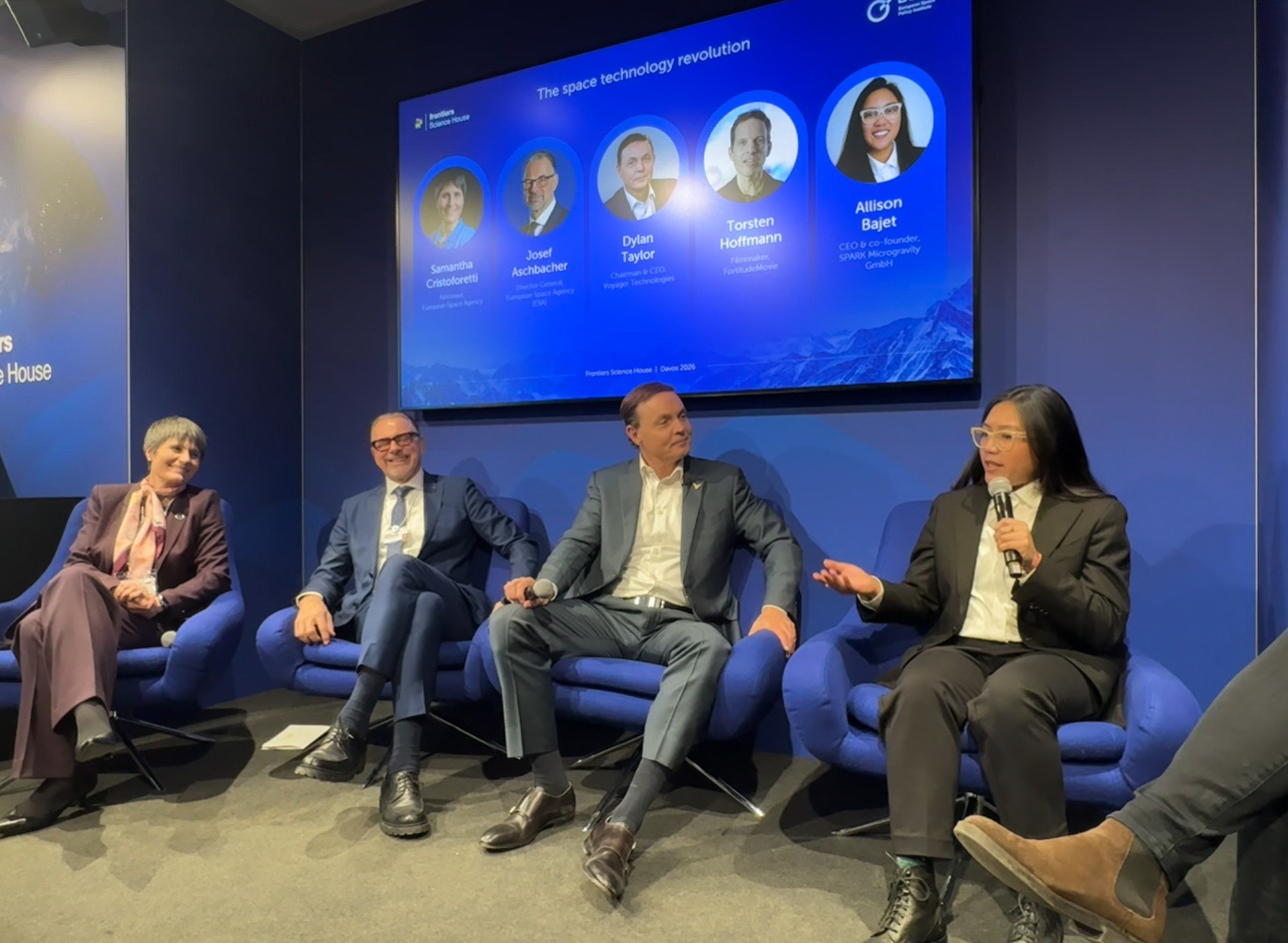
Davos, Switzerland — January 2026 — SPARK Microgravity’s Co-Founder and CEO, Allison Bajet, joined an exceptional group of internationally recognized space leaders at Frontiers Science House in Davos for the session “The Space Technology Revolution,” contributing SPARK’s perspective to a broader conversation on the technologies reshaping the future of space.
Sharing the stage with figures including Dylan Taylor (chairman and CEO Voyager Technologies), Samantha Cristoforetti (Former ISS Commander and ESA Astronaut), and Josef Aschbacher (Director General, ESA), Bajet represented a new generation of founders building highly specialized infrastructure at the intersection of commercial space and human health. Her participation in the session marked a significant moment for SPARK Microgravity, placing the company’s voice within a senior, global discussion on where the space economy is heading — and what kinds of technologies will define its next phase.
The session explored the transformation underway across the space sector: from government-led activity and demonstration missions to scalable commercial systems with real-world applications across industries. Within that broader narrative, SPARK brought a distinct and important perspective. The company is not building generic laboratory access in orbit. It is building purpose-built infrastructure for oncology research — a platform designed to help cancer researchers and pharmaceutical innovators access microgravity as a meaningful environment for biological discovery.
That distinction matters. As the commercial space sector matures, the value of space technologies will increasingly be measured not only by launch capability or orbital access, but by their ability to solve consequential problems on Earth. SPARK’s thesis sits precisely in that category. Its work argues that the long-term value of space will come not only from moving people or hardware beyond Earth, but from enabling new scientific conditions that can generate breakthroughs in medicine.
Bajet’s presence on the panel reinforced SPARK’s emergence as a company operating credibly within that future-facing conversation. It also signaled that the market is beginning to recognize a broader truth: some of the most interesting space companies of the next decade will not be defined solely by propulsion, satellites, or transport, but by what they enable for other sectors once in orbit.
“The future of space is not only about where we can go,” said Allison Bajet. “It is also about what we can unlock once we get there. For us, the question is how to use space to solve a deeply human problem — in our case, how to better understand cancer and support better therapeutic decisions. That is the kind of space economy we want to help build.”
For SPARK Microgravity, the session offered more than visibility. It represented a powerful form of association: a chance to articulate the company’s vision in a forum populated by some of the most respected voices in the field. In doing so, SPARK demonstrated that its platform belongs in the broader conversation about the future architecture of the space economy.
As the company continues to build toward operational missions and commercial partnerships, moments like this matter. They strengthen external trust, deepen ecosystem relevance, and reinforce that SPARK is not simply participating in the future of space-enabled health research — it is helping define it.
SPARK Microgravity Completes First Rocket Launch, Marking a Major Milestone Toward Orbital Cancer Research

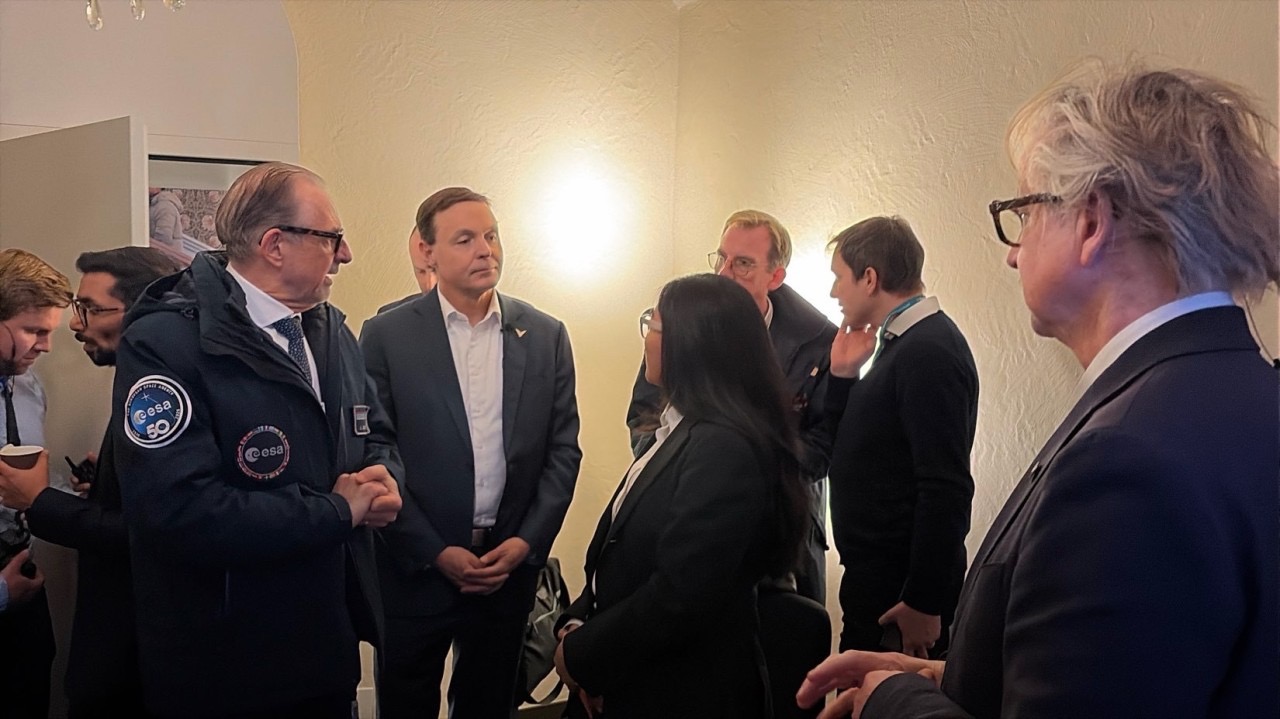
SPARK Microgravity’s leadership engaged with partners including Atmos Space Cargo, Space Cargo Unlimited, and Merck Sharp & Dohme (MSD)
.svg)


From orbit to clinic, let’s launch the future of healthcare, together.