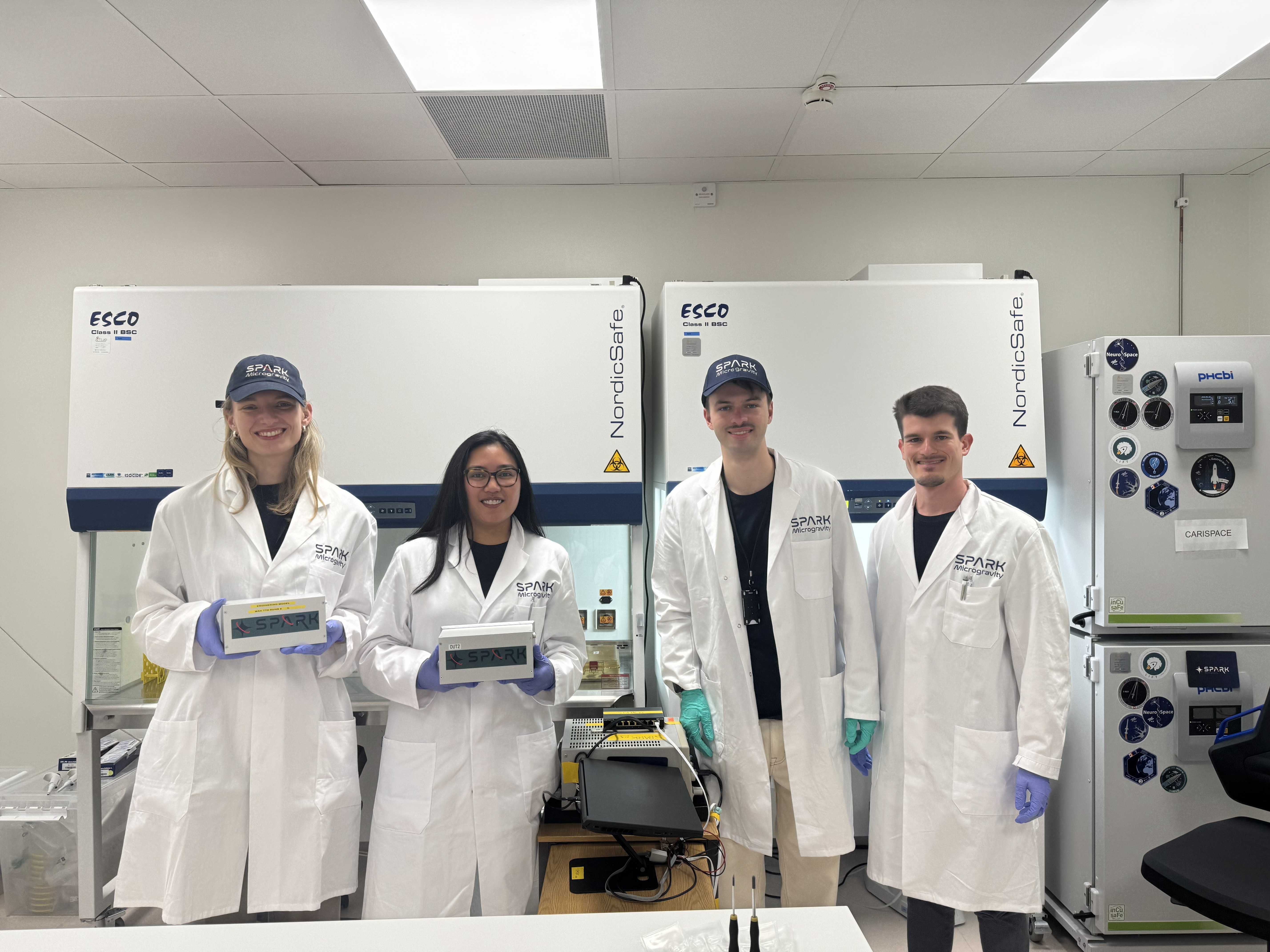
SPARK Microgravity Completes First Rocket Launch, Marking a Major Milestone Toward Orbital Cancer Research
SPARK Microgravity Completes First Rocket Launch, Marking a Major Milestone Toward Orbital Cancer Research


In orbit, cancer cells grow in ways that more closely mimic human tumors, offering a clearer, more predictive lens for oncology R&D than traditional lab models.
TL;DR: Key Insights for R&D Leaders
The story of cancer begins silently, with small changes to DNA that rewrite the fundamental rules of cell life. Over years, these mutations can accumulate, disabling the natural safety brakes that control cell division and telling cells to ignore signals for programmed death.
But a tumor is far more than just a ball of rogue cells. It is an active ecosystem. To survive and thrive, a tumor hijacks its surroundings, creating a supportive network known as the tumor microenvironment. This complex community includes structural cells, blood vessels, and even co-opted immune cells that shield the tumor from attack. This environment doesn't just surround the cancer; it actively feeds, protects, and communicates with it, shaping its growth and resistance to treatment.
As a tumor expands, it requires more oxygen and nutrients than it can get from simple diffusion. To solve this, it releases chemical signals that trigger angiogenesis—the growth of new blood vessels. These new capillaries snake their way into the tumor, delivering a steady supply of fuel.
Often, these new vessels are chaotic and leaky. This creates an uneven internal landscape within the tumor, with some areas rich in oxygen and others starved. This stressful, varied terrain can make some cancer cells more aggressive and resilient. It also provides them with an escape route. The same vessels that feed the tumor offer a gateway into the bloodstream, enabling the cancer’s most dangerous step: metastasis.
Metastasis occurs when cancer cells break away from the original tumor, survive a hostile journey through the circulatory system, and establish new colonies in distant organs like the lungs, liver, or brain. This is the process that turns a localized disease into a systemic, life-threatening one, and it is responsible for the vast majority of cancer-related deaths.
For decades, scientists have relied on two primary tools to study cancer: 2D cell cultures and animal models. While they have yielded critical insights, both have significant limitations in replicating the complex, three-dimensional reality of a human tumor.
Flat layers of cells in a petri dish lack the architectural structure, cell-to-cell signaling, and nutrient gradients of a real tumor. This artificial environment can cause cells to behave in ways they never would inside the body. Animal models, such as mice, get closer to simulating a living system, but fundamental differences in their physiology, immune systems, and metabolism mean that results often fail to translate to humans. This gap between our lab models and human biology is a major reason why so many promising cancer drugs that look great in early tests ultimately fail in clinical trials.
Microgravity provides a unique solution to these challenges. In the near-weightless environment of low Earth orbit, the physics of cell growth change in ways that allow for more realistic models.
Without gravity pulling them down, cancer cells don't flatten against a surface. They float and self-assemble into 3D spheroids. These structures naturally develop the same kinds of internal gradients—low oxygen at the core, higher oxygen at the periphery—that are seen in human tumors. The absence of gravity-driven sedimentation and fluid shear also creates a cleaner, more stable environment, allowing researchers to observe cell interactions and drug responses without confounding physical forces.
The result is a model that behaves more like real disease. By comparing how tumors grow in humans with how they behave in microgravity, we get a far more accurate and revealing picture than we can from traditional models alone.
For pharmaceutical companies and biotech innovators, this superior model has profound implications. Accessing more predictive preclinical data can transform the R&D pipeline.
Microgravity research offers a path to smarter, faster, and more efficient drug development. It gives researchers a powerful new tool to understand cancer's complexities and find its vulnerabilities.
The next frontier in cancer research is not on Earth. It is in orbit, where a clearer view of biology is accelerating the search for cures. SPARK Microgravity makes it turnkey to design, launch, and analyze orbital experiments that deliver decision-grade data. If you are ready to leverage a more predictive model to advance your oncology pipeline, partner with us to explore what microgravity can reveal.
SPARK Microgravity is a startup dedicated to democratizing space research and making it accessible for researchers across the globe. Headquartered in Munich with operations in the U.S. and Europe, SPARK Microgravity is building Europe’s first orbital cancer research laboratory to accelerate oncology breakthroughs in microgravity. By providing end-to-end microgravity research services – from experiment design and launch integration to data analysis, SPARK Microgravity enables pharmaceutical companies to leverage the space environment for R&D. Our mission is to advance scientific exploration in low Earth orbit and translate those discoveries into life-saving innovations back on Earth.
SPARK Microgravity Completes First Rocket Launch, Marking a Major Milestone Toward Orbital Cancer Research

SPARK Microgravity’s leadership engaged with partners including Atmos Space Cargo, Space Cargo Unlimited, and Merck Sharp & Dohme (MSD)
.svg)


From orbit to clinic, let’s launch the future of healthcare, together.